
What to Feed a Senior Dog: A Fremont Owner's Guide
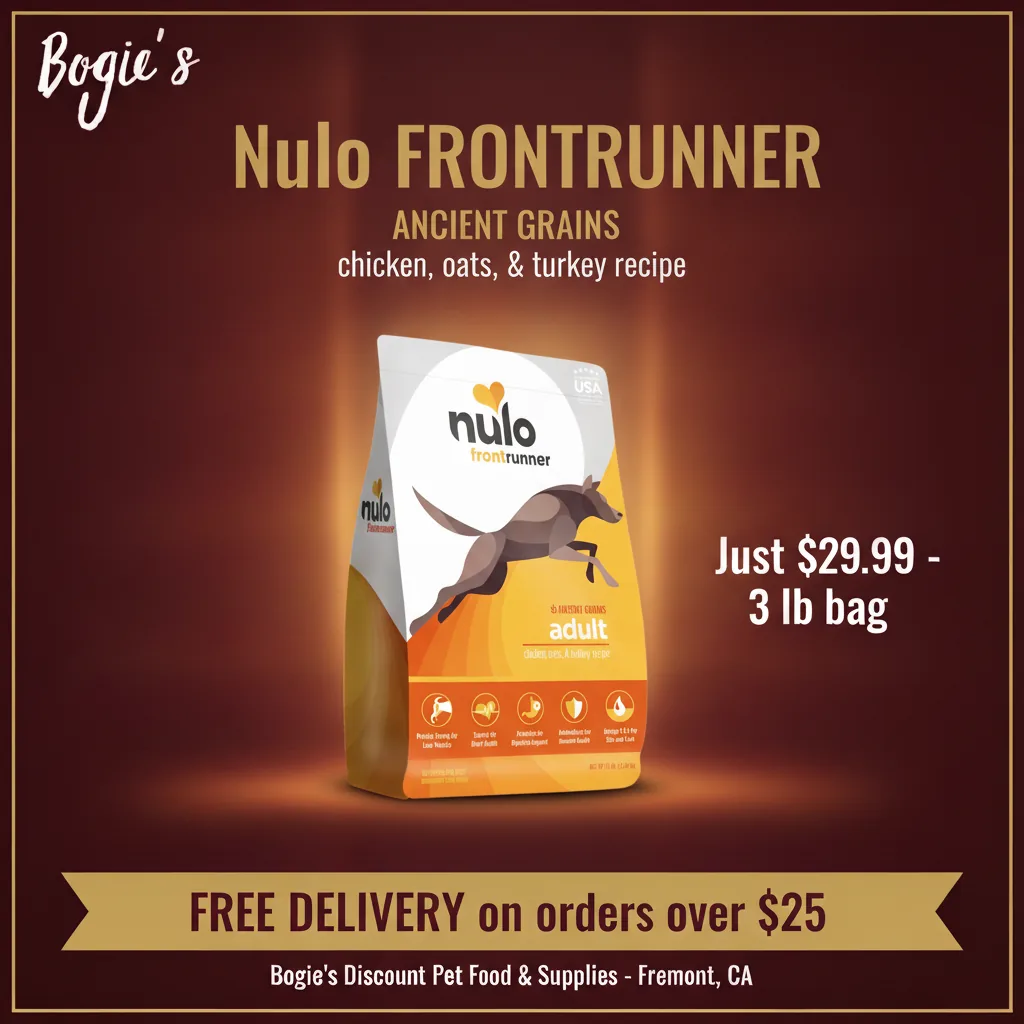
The best food for old small dogs isn’t one bag. It’s a match between caloric needs, joint status, and chewing ability. A 12-pound terrier at eight needs fewer calories per pound than at three, but more joint support for the same walk. At Bogie’s on Fremont Blvd, three senior formulas sit side by side so you can compare nutrient panels instead of guessing from a website.
Calorie math shifts at seven
Dogs over about seven start needing fewer calories and more joint support at the same time. That tension is the whole problem. A 12-pound senior terrier isn’t a small version of a 12-pound puppy. Its metabolic rate has dropped, muscle mass is redistributing, and the joints are doing the same daily work with less cartilage cushion.
The big-box “senior” bags are so often wrong for a 12-pound terrier and right for a Labrador. Those formulas calibrate around the average large-breed senior. A small dog in that bag gets too much protein for its frame and not enough omega-3 for its smaller joint surface.
AAFCO’s current framework includes two nutrient profiles: Adult Maintenance and Growth & Reproduction. There is no separate small-breed senior category. That gap is where the wrong bag sneaks in. AAFCO also states that dogs have nutrient requirements, not ingredient requirements, so the specific protein source matters less than the amino acid profile it delivers.
- Protein: a named meat source (chicken, turkey, salmon) as the first ingredient, not “meat by-product” or “animal fat”
- Caloric density: a common maintenance starting point for a small senior is 30 to 40 kcal per pound of body weight per day
- Omega-3: check the guaranteed analysis for EPA and DHA levels, not just “fish oil” buried in the ingredient list
What does the joint-support label actually mean?
Glucosamine is a building block for cartilage, but the evidence for supplemental benefit in dogs remains mixed. According to WebMD’s supplement database, multiple studies on glucosamine for osteoarthritis have produced different results, largely because the studies used different product forms (sulfate versus hydrochloride) and different dosing protocols.
For a small senior, the practical question is whether the food already contains adequate joint support or whether you’re layering a separate supplement. Check the guaranteed analysis for glucosamine, chondroitin sulfate, and omega-3 fatty acids. If the food lists them at meaningful levels, you may not need a separate pill. If it doesn’t, a targeted supplement makes sense.
- Glucosamine in sulfate form provides structural support for cartilage
- Chondroitin sulfate helps cartilage retain water and stay flexible
- For the inflammatory side, omega-3 fatty acids (EPA and DHA) work through a different mechanism than the structural pair
Read the panel, not the bag front
The ingredient list is ordered by weight. The first ingredient is the heaviest in the formula. If “chicken meal” leads, that’s your primary protein. If “wheat gluten” or “corn” leads, the protein quality drops and filler goes up.
For a gradual transition, give your dog seven to ten days. Day one: 25 percent new food, 75 percent old. Day four: 50/50. Day seven: 75/25 new. Day ten: all new. If stool changes or appetite drops, hold at the current ratio for two more days before advancing.
Weigh your dog every two weeks during the switch. A 12-pound dog should sit between 11 and 13. If it’s creeping toward 14, trim the portion before adding more food. Weight management for a small senior is less about cutting calories and more about keeping protein high enough to preserve muscle while the total energy dial turns down.
- First three ingredients by weight
- Named protein source versus “meat by-product” or “animal derivative”
- Guaranteed analysis: protein %, fat %, fiber %, and omega-3 levels
- The AAFCO “complete and balanced” statement for adult maintenance
Wet food isn’t a compromise
Pedigree’s senior-care guidance identifies teeth sensitivity, urinary-tract risk, and joint discomfort as the primary reasons a senior dog benefits from softer food. Wet food’s higher moisture content is the single biggest nutritional difference from kibble. For a small senior with a sensitive mouth or a history of urinary issues, that extra water in the food does real work.
That doesn’t mean kibble is wrong. Both dry and wet formulas can deliver complete, balanced nutrition if they meet AAFCO standards through laboratory analysis or feeding trials. The question is which format your specific dog can handle at its current age and dental status. A dog with mild tooth sensitivity may do fine with a softer kibble. A dog with gingivitis or a missing tooth will eat more comfortably from a can.
If your dog is on the fence, mix a small amount of wet food over the kibble for a week. Watch for changes in stool consistency and appetite. That tells you more than any label claim.
If the three bags on the shelf at 37085 Fremont Blvd still leave you uncertain, bring your dog’s current food and a recent weight to the counter. The panels are right there. You don’t have to guess.